
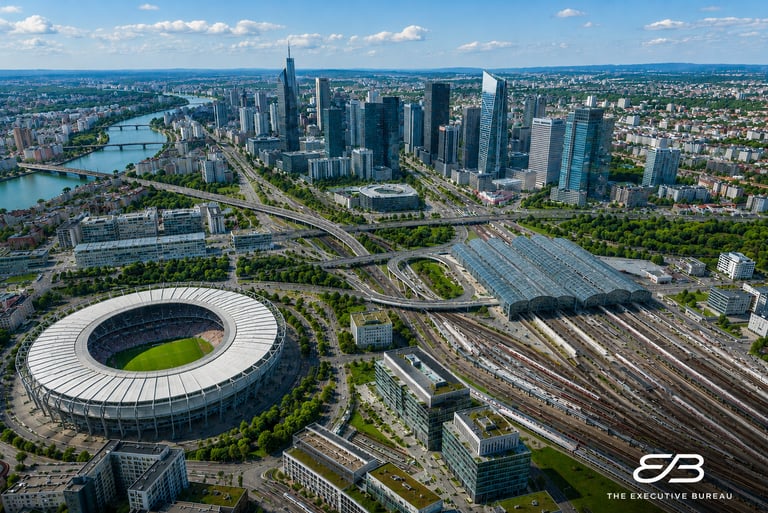
As the FIFA World Cup comes to an end this summer, discussions naturally turn to audience numbers, tourism, economic impact, and international visibility.
Major international events place countries under a global spotlight.
For a few weeks, millions of people discover cities, infrastructures, institutions, and local ecosystems through the lens of a single event.
When an event is successfully delivered, it often reinforces a simple perception:
This country looks capable, organised, and attractive.
But does a country's ability to successfully host a major international event translate into its ability to attract and support international business?
The answer is more nuanced than it may first appear.
What Major Events Demonstrate
Successfully organising an international event is no small achievement.
It requires:
coordination across hundreds of stakeholders
large-scale infrastructure
logistics and transportation
security and risk management
communication and public services
execution under significant public scrutiny
In many ways, major events are demonstrations of operational capability.
They show that a country can coordinate complex systems and deliver results at scale.
For international observers, investors, and business leaders, these signals matter.
They contribute to a country's image and reputation.
Attractiveness Is More Than Visibility
This is where the conversation often shifts from perception to operations.
Visibility can generate interest.
It can attract attention.
It can encourage organisations to take a closer look.
However, attention and investment are not the same thing.
When a company seriously considers establishing operations in a new country, the questions quickly become more practical:
Can we recruit the right talent?
How easy is it to establish a local presence?
How mature is the business ecosystem?
Can our employees and executives settle successfully?
Will local operations support long-term growth?
A successful event may open the door. But attractiveness is ultimately tested through experience.
Here is what that test often looks like in practice.
A company impressed by a country's ability to deliver a major event begins exploring expansion. The visibility was the trigger. But the decision to actually move forward depends on a different set of answers: how long it takes to open a bank account, whether the recruitment process matches the urgency of the business plan, whether administrative procedures are predictable or opaque.
A country can deliver a flawless month-long event and still see a company hesitate over a six-week entity registration process. The two capabilities — event delivery and business execution — are related, but they are not the same thing, and companies test the second one directly before committing.
The Business Version of an International Event
In some ways, welcoming international companies presents challenges similar to hosting a major event.
Different stakeholders must work together.
Processes must be coordinated.
Infrastructure must support growth.
Information must flow efficiently.
The experience must be positive from beginning to end.
The difference is that there is no closing ceremony.
For international companies, the experience continues long after arrival.
Experience Shapes Reputation
Countries do not build their reputation through a single event.
They build it through the cumulative experience of everyone who interacts with them over time; executives, employees, families, partners, and investors alike.
These experiences influence how a country is perceived far more than any marketing campaign or international event.
A country may successfully attract attention.
Its long-term attractiveness is often determined by what happens next.
What This Means in Practice
For companies evaluating a market based on the visibility created by a major event, a few practical questions can help separate perception from operational reality:
What is the typical timeline for entity creation and business registration?
How predictable are administrative processes for foreign companies specifically?
What does the experience look like for the first employees and executives who relocate?
Is there a clear point of contact for navigating local systems, or does responsibility sit nowhere in particular?
These questions rarely make headlines during a major event. But they tend to determine whether the initial interest a country generates translates into a long-term operational presence.
Major events can demonstrate a country's ability to execute.
Long-term attractiveness depends on whether that same level of execution extends beyond the event itself.
Because attracting global attention is one challenge.
Helping international organisations establish, operate, and grow successfully is another.
Visibility creates interest.
Experience builds confidence.
And confidence is what ultimately sustains attractiveness long after the event is over.
Looking Beyond the Event